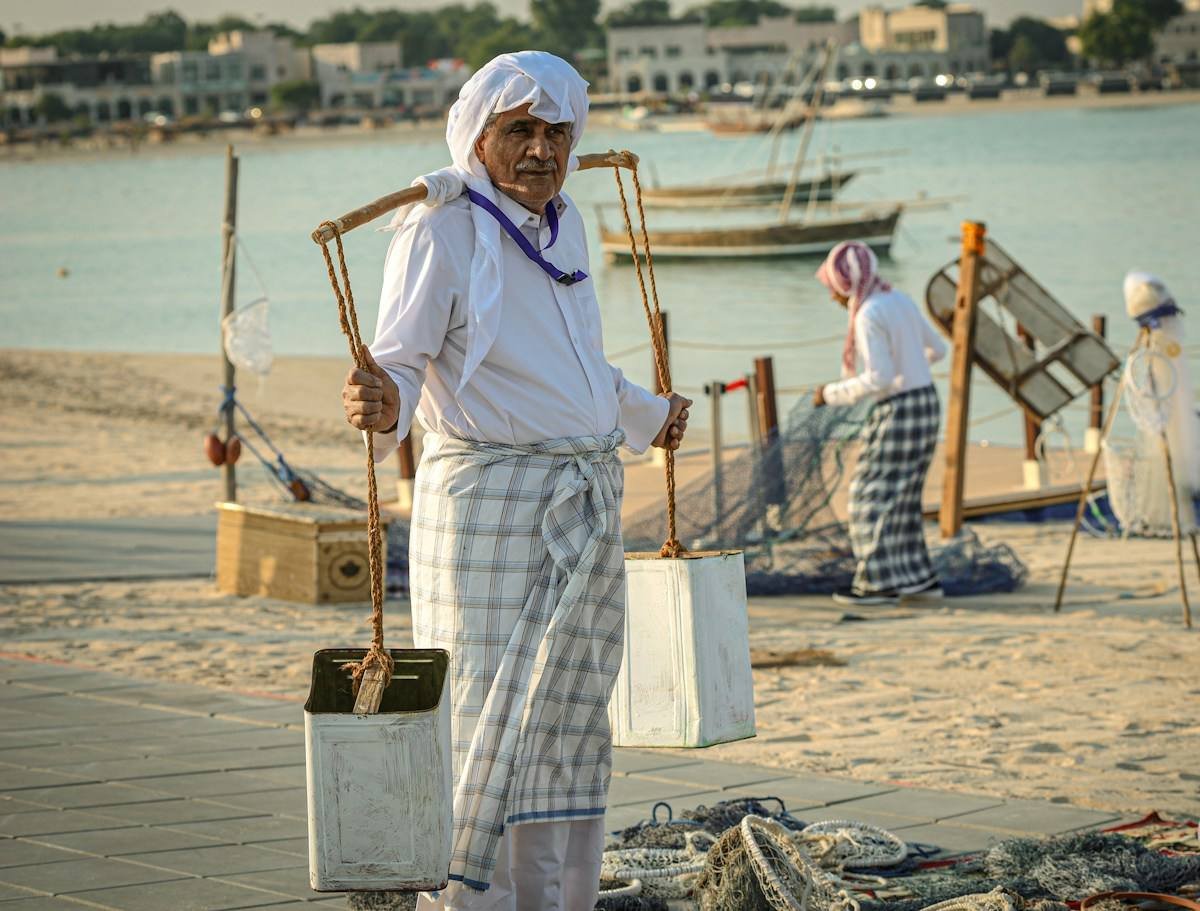
A model of lower cost and greater dignity
Detention costs tens of thousands per person. Supported reinsertion builds businesses, jobs, and stability — and the fund revolves: repayments serve the next participant.
The economic rationale
Cost comparison, multiplier math, and the revolving-fund model — in our white paper.
Frameworks for partnership
Pilot cohorts, matched funds, training partnerships, reception agreements.
Addressing the causes at their source
Detention treats the symptom — forever, at enormous cost. Returnee businesses treat the cause: every job created at home removes a reason to migrate out of desperation.
Partnerships in development
Home-country ministries, EU return programs, legal aid networks, microfinance partners.
The case for GHCRI, in seven points
For the ministry, the funder and the sceptic: why a supported return is the cheapest, most durable answer to irregular migration — and why it pays for itself.
The skills already exist
Millions of migrants have spent years inside the world's most productive economies — on construction sites, in food plants, kitchens, warehouses and workshops. That experience is a trained workforce no development programme could afford to create. GHCRI certifies it and points it home.
Processing at home multiplies value
Most exporting regions sell their harvest raw and buy it back finished. Every processing line, cold store, bakery, fish plant or workshop that opens at home keeps that margin in the country — and each one hires local people who no longer need to leave.
Capital that never runs out
A grant is spent once. A GHCRI micro-loan is repaid into a revolving fund and lent again — the same dollar launching founder after founder. Group guarantees, proven by microfinance worldwide, keep repayment high.
A fraction of the cost of the alternative
Detention, removal and re-migration cost tens of thousands of dollars per person, every time, and solve nothing. Certification, relocation, coaching and a startup loan cost a fraction of that — once — and produce a taxpayer at home instead of a case at the border.
A reason to stay, for the whole family
Every enterprise a returnee launches gives their family — and the neighbours it hires — a livelihood where they already are. That is the only dam that holds at the source: opportunity, not fences.
Governments and agencies win too
Home-country ministries gain new employers, tax revenue and export capacity; host countries gain a dignified, voluntary alternative; the IOM and existing return programmes gain a partner working on what happens in year two, three and five.
Everything is measured and published
Targets are stated in advance and results are published beside them every quarter — participants, enterprises, jobs, repayment — with sources and shortfalls shown. Partners fund what they can verify.
A humanitarian crisis ends at the root, not at a border
Every business a returnee launches gives whole families a reason to never risk the journey. Jobs and financial freedom where people already are: migration by choice, not crisis. Preventing the next crisis costs a fraction of managing this one — a long-term investment that compounds and saves taxpayers billions over time.
Contribute to the fundfirst
Our targets — Expectations
What we are working towards, published in advance so we can be held to them. These are intentions, not achievements — progress shown is illustrative until the programme is operating, at which point every bar carries a measured figure.
Progress bars are illustrative of intent. Once the programme is operating we publish measured results beside each target every quarter — in green where delivered, and in terracotta with an explanation where we fall short.
What this model is expected to produce
These are modelled expectations, not results. The programme has not yet enrolled participants. Every figure below is an illustrative projection at scale, shown so partners and funders can examine our assumptions — not a record of what has been achieved.
Modelling assumptions: an average of two additional local jobs per enterprise, and a repayment rate drawn from published microfinance group-lending experience. Both will be tested by our first cohort and replaced with measured results, whatever those results show.
What we will publish once operating
Participants supported, enterprises launched, employment created and loan repayment — quarterly, with sources shown and shortfalls included.
IOM — and the contribution GHCRI makes
The International Organization for Migration (IOM) is the UN migration agency. For decades it has run assisted voluntary return and reintegration programmes with governments worldwide, and it defines sustainable reintegration as economic self-sufficiency, social stability and psychosocial well-being. We build on that foundation — we don't replace it.
Learn about IOM, or work with them directly
Visit iom.int to explore their return and reintegration programmes in your country. Many people are eligible for their support — go to them first if that fits your situation. We will never stand between you and help that serves you.
IOM return and reintegration ↗
Where we concentrate our work
Skills made bankable
Years of U.S. work turned into recognized certification and a written business plan — an asset a lender, a customer and a ministry can all read.
Coaching by people who did it
Successful returnees and local entrepreneurs who know that market — not only professional counsellors. The person coaching you has already walked the road.
Coaching for the pressure
Returning means pressure from every side: family expectations, money, identity, starting from zero. Four weeks free at arrival, continuing by choice.
Groups, not lonely ventures
We group participants by trade and profession so they launch together — shared capital, shared risk, shared customers. A crew of five builders beats five people each starting alone.
Circular capital
Loans are repaid into the fund, so the same money serves returnee after returnee. Not a grant that ends — capital that circulates.
A network on every continent
Successful returnees and business leaders who open doors, supply, mentor and buy — so a new enterprise starts inside a network instead of outside one.
Complementary, not competing. IOM operates at global scale with governments; we work close to the ground on what makes a return succeed year after year — and on the root causes that make people leave in the first place. Where our work overlaps, we coordinate. Where a person is better served by IOM or another agency, we say so.
Where we work — country by country
We are building partnerships country by country, starting with a pilot nation. Demand shapes where we go next: tell us where you are from through the contact form.
Mexico & Central America
Pilot region — home-country ministries, reception agreements and anchor sectors under discussion.
Caribbean (incl. Haiti)
Priority — Kreyòl Ayisyen pathway, diaspora-as-first-customers model.
South America
Programme design with training and microfinance partners.
Africa
Returnees as seed capital for industries hidden in plain sight; a warm welcome and resources at arrival.
Asia
Programme design; language pathways through the assistant in 34 languages.
Europe
Co-measured pilots with European return agencies and institutions.
The model, the economics, the safeguards
12 pages: the cost comparison with detention, the revolving-fund design, program safeguards, and the pilot proposal. Tell us where to send it: