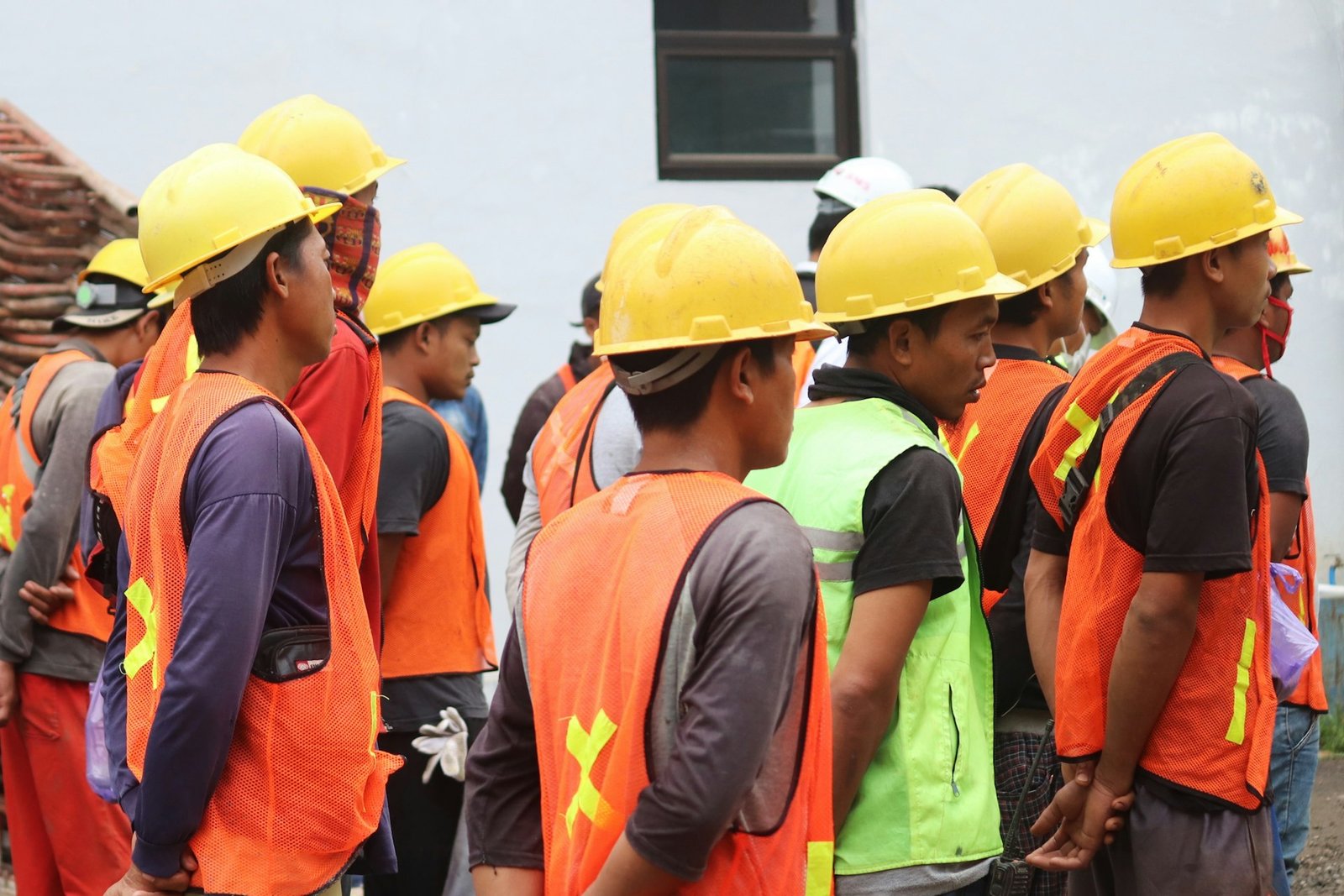


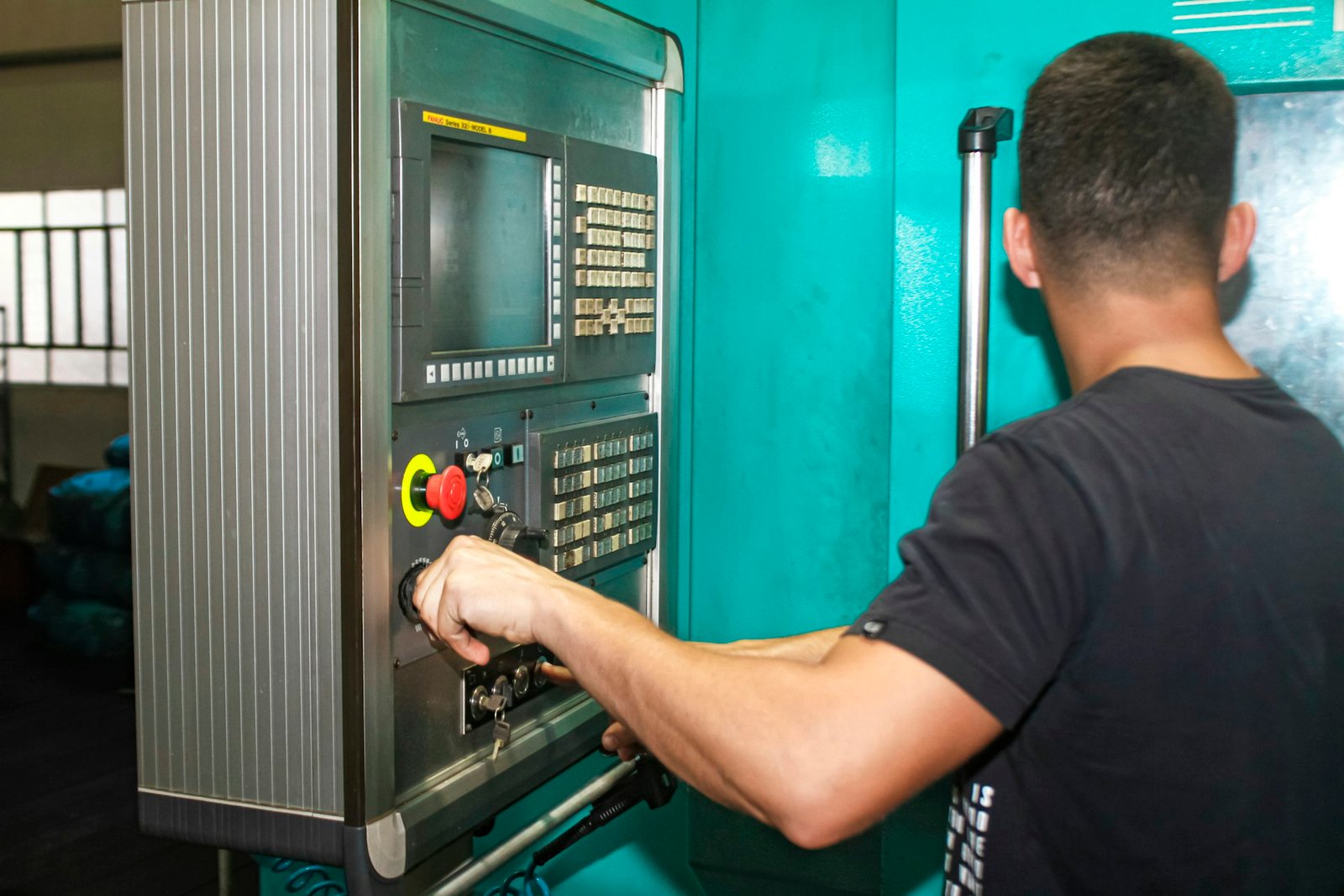




Prepared to build, not just to return
The Resources Centre is the learning programme of the Global Human Capital Reinsertion Initiative. Five chapters take you from choosing a business to keeping it strong in a competitive market, and prepare you for the personal side of moving home or to a new country.
Every lesson ends with key takeaways, a practice exercise linked to our free tools, and a short self-check. Two assessments then measure your readiness: the Business Readiness Index places you at the right level of coaching and group support, and the Business Book Knowledge Check confirms you have mastered the core reading before startup capital of $30,000 to $50,000 is approved, repaid as the business grows.
Your path through the programme
- Sign up and complete your experience profile.
- Take the Business Readiness Index to find your level.
- Placement and verification by your coordinator.
- Community endorsement: an affidavit of good character from the leader of your registered community or association.
- Study the five chapters, starting with your recommended ones.
- Pass the Book Knowledge Check for each required book.
- Build your plan in the Business Planner with your group.
- Join your group, your coach and the weekly Returnee Circle.
- Capital approval, then launch with coaching and follow-up.
Your road to capital, at a glance
Your tools on the road to success
Every stage of the journey has a free tool behind it. Here is what each one does for you.
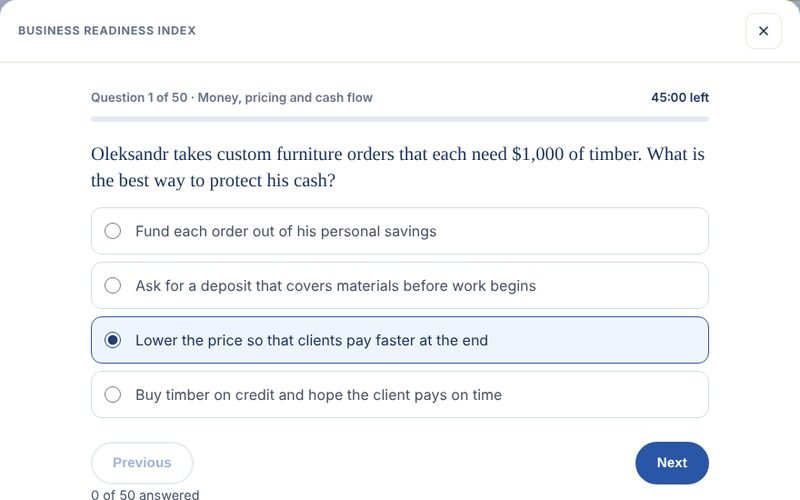 Stage 2
Business Readiness Index
Measures your knowledge and judgement across eight areas, places you at the right level, and shows exactly which chapters to study first.
Open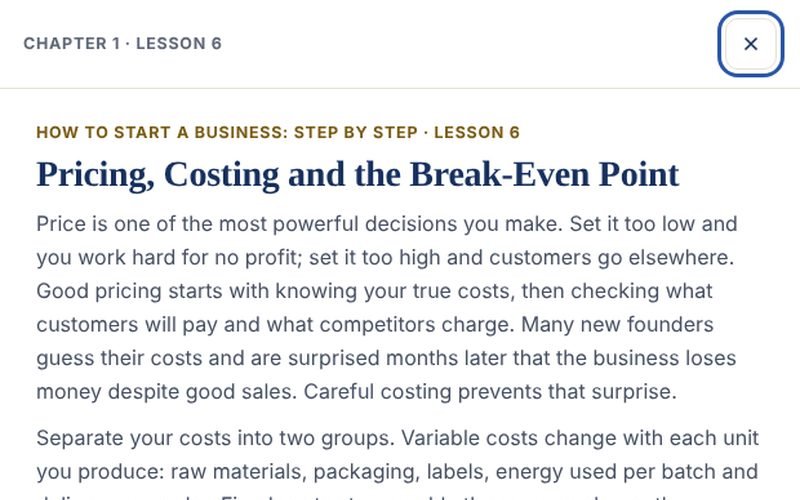 Stage 5
Resources course
Forty-four lessons with exercises and self-checks that take you from choosing a business to growing it in a competitive market.
Open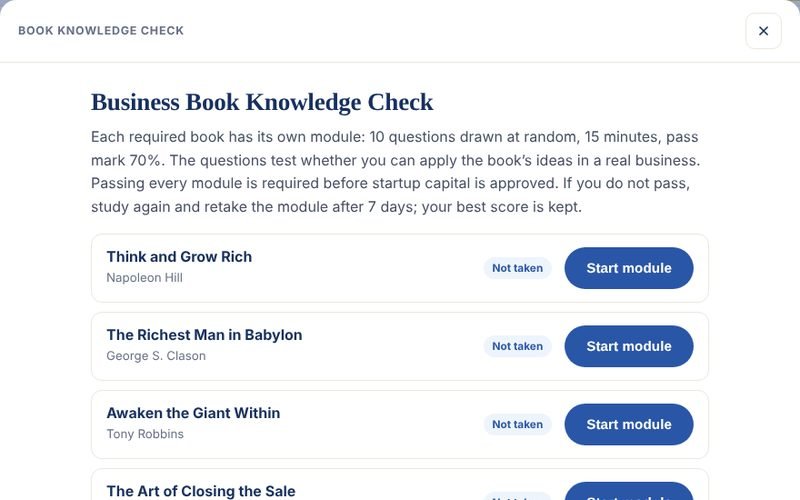 Stage 6
Book Knowledge Check
Confirms you can apply the ideas of the required books, the last learning step before startup capital is approved.
Open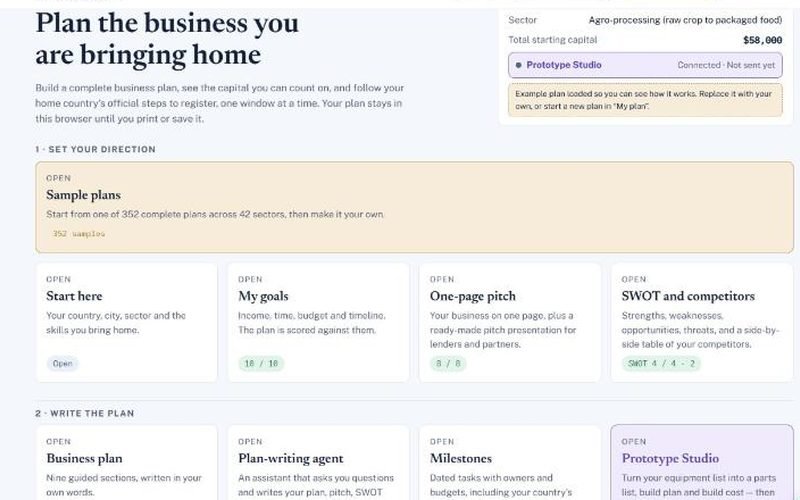 Stage 7
Business Planner
Builds a lender-ready plan with a five-year forecast, break-even, cash flow and the official registration steps for your country.
Open Stages 5 to 7
Free research tools
Country snapshots and research desks that help you check demand, prices and conditions before you spend.
Open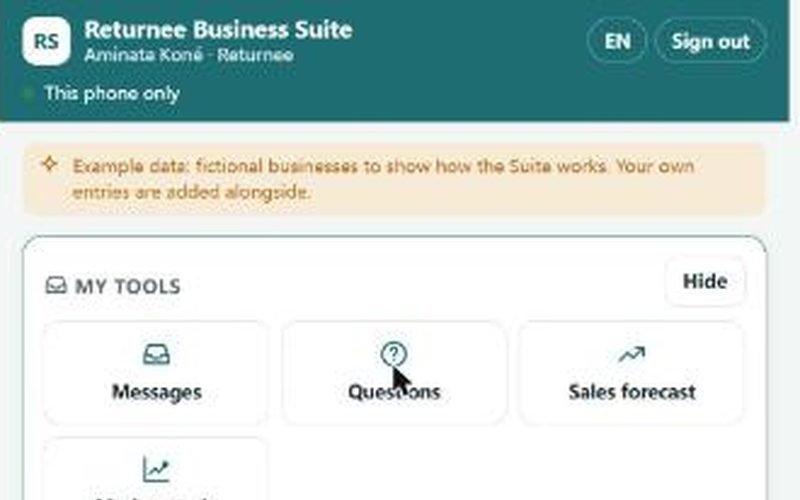 Stages 8 and 9
Returnee Business Suite
Runs the business day to day: customers, tasks, money and reports, shared with your coach and coordinator.
Open Every stage
Innovation chapter
Shows the tools and methods that move raw materials to finished products and to market faster.
OpenThe course, in the order you use it
Seven parts, each on its own page, now in the order of the road: the Business Readiness Index and your group first, then the five chapters. Every lesson ends with key takeaways, a practice exercise linked to a free tool, and a short self-check.

Business Readiness Index
Find your level and confirm your readiness
Open
Groups and Returnee Circle
Levels, groups and the weekly meeting
Open
How to start a business
Eleven lessons, from idea to the first ninety days
Open
How to stay in business
Cash flow, systems, team and compliance
Open
Winning strategies
Positioning, innovation and export
Open
Mental preparation
Moving home or to a new country
OpenBooks for success
Required and recommended reading
OpenA twelve-week study plan
A suggested rhythm of about five hours a week, alongside the weekly Returnee Circle. Your coach adjusts the order to your Business Readiness Index result; Level 3 founders usually move faster.
| Weeks | Focus | Finish the week with |
|---|---|---|
| 1 | Experience profile and the Business Readiness Index | Your level, your strengths and gaps by area, and your recommended chapters |
| 2 | Chapter 4, lessons 1 to 5: adjustment, family expectations, leaving with gratitude | A written family conversation plan and your accountability partner named |
| 3–4 | Chapter 1, lessons 1 to 5: choose, validate, plan, register, equip | Skills inventory, three scored ideas and ten buyer interviews |
| 5–6 | Chapter 1, lessons 6 to 11: pricing, customers, hiring, bookkeeping, capital, the first ninety days | Break-even worksheet and a one-page launch plan |
| 7–8 | Chapter 2: cash flow, quality, systems, team, compliance and risk | Four-week cash forecast, risk register and compliance calendar |
| 9–10 | Chapter 3: positioning, value added, digital sales, export and brand | A positioning statement and a first export-readiness check |
| 11 | Chapter 4, lessons 6 to 10, and the Chapter 5 reading | Personal readiness checklist complete |
| 12 | Book Knowledge Checks and the group business plan | All four required books passed and the plan reviewed by your coach |
What every returnee commits to
These commitments protect the group, the revolving fund and the next returnee it will finance.
- Flexibility. Adapting plans when the facts change, taking on the role the group needs, and trying new tools and methods.
- Coachability. Listening to the coach, acting on feedback, admitting mistakes early and asking for help.
- The weekly Returnee Circle. Attending every week, by Zoom or at the local office, to share ideas, results and solutions.
- Shared responsibility. Respecting group decisions and repaying the group’s startup capital together, so it can fund the next returnee.
- Lifelong learning. Reading, studying and staying current, as the most successful leaders do.
- An accountability partner. Pairing with one member of the group to review goals and results each week, between Returnee Circles.
- Community standing. An affidavit of good character, signed by the leader of a registered community or association.
- Honest records. Keeping clear books and reporting progress openly to the coordinator.
Launch support and home countries
Two forms of support that lower the cost of starting and help every returnee business lead its market from the first day.
Launch support: online and ahead from day one
From the very start, the Global Human Capital Reinsertion Initiative helps every returnee business reach its customers and lead its market, at no cost to the returnee.
- A free business website: a complete website or a focused one-page site, built with the returnee and ready for launch day.
- Social media accounts set up: business profiles on the platforms the business’s customers use, with consistent branding and a first content plan.
- Applied data science and business intelligence: market studies, customer and competitor analysis, and pricing and sales dashboards, so every decision rests on evidence and the business can lead in its market.
Your coach and coordinator arrange this support as part of your launch plan.
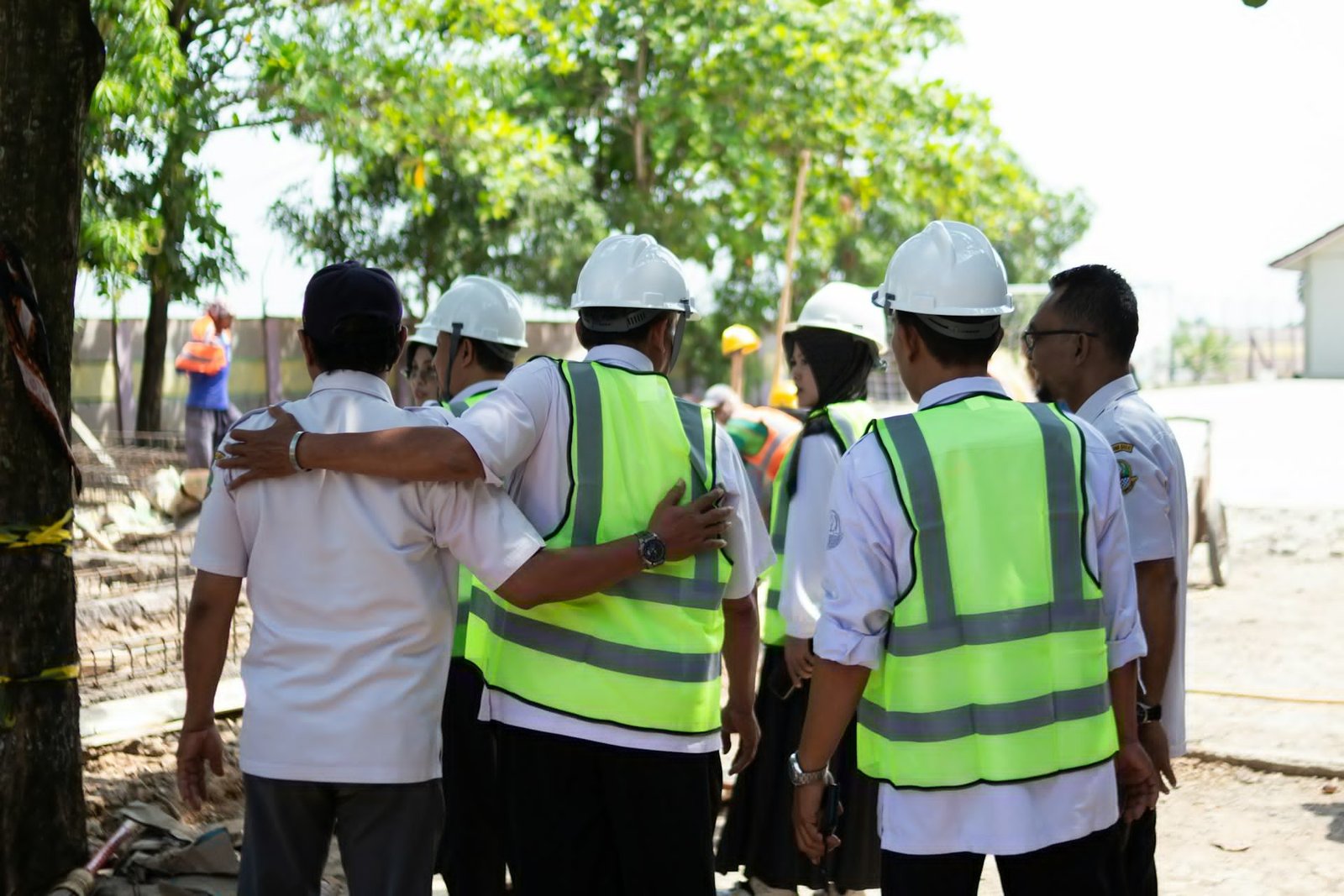
Working with home countries
The Global Human Capital Reinsertion Initiative works with the governments of home countries to bring the cost of starting a business for returnees as close to zero as possible, and to make the process as simple and fast as possible.
- Reduced or waived registration, licence and permit fees for returnee businesses
- Fast-track registration and a single point of contact for returnees
- Clear, step-by-step guidance on every official requirement, built into the Business Planner
- Matching support from home-country programmes alongside the returnee’s startup capital
Where an agreement is in place, your coordinator will show you exactly which costs are reduced or covered in your country.
Templates and checklists
Every worksheet the lessons ask you to complete, gathered in one place, with the lesson that explains it. Your coach reviews each one with you.
| Worksheet | What you produce | Taught in |
|---|---|---|
| Skills inventory | Every job, machine, certificate and process you mastered abroad | Chapter 1 · Lesson 1 |
| Idea scoring sheet | Three ideas scored 1 to 5 on skills fit, demand, local inputs and innovation | Chapter 1 · Lesson 1 |
| Buyer interview guide | Fifteen interviews: what buyers purchase, at what price, how often, and what frustrates them | Chapter 1 · Lesson 2 |
| Supplier comparison table | A main and a backup supplier for each critical input | Chapter 1 · Lesson 5 |
| Break-even worksheet | Variable cost, contribution per unit and monthly break-even volume | Chapter 1 · Lesson 6 |
| One-page launch plan | Launch date, first twenty customers, launch offer and channels | Chapter 1 · Lesson 7 |
| Role description and practical test | Tasks, pay, hours, measures and a fifteen-minute skills test | Chapter 1 · Lesson 8 |
| 90-day launch checklist | Three thirty-day stages with target dates | Chapter 1 · Lesson 11 |
| Four-week cash forecast | Cash today, expected receipts and payments, and the lowest week | Chapter 2 · Lesson 2 |
| Quality standard sheet | Standards for inputs, production and finished goods | Chapter 2 · Lesson 3 |
| Skills matrix | Who can do each task, and the cross-training plan | Chapter 2 · Lesson 5 |
| Compliance calendar | Twelve months of tax, licence and insurance deadlines | Chapter 2 · Lesson 6 |
| Risk register | Five risks with likelihood, impact, prevention and response | Chapter 2 · Lesson 7 |
| Coach meeting agenda | Key numbers, two challenges and three questions | Chapter 2 · Lesson 10 |
| Personal readiness checklist | Everything to settle before departure | Chapter 4 · Lesson 10 |
Business glossary
The terms used across the course, in plain words, with the lesson where each one is taught.
- Break-even point
- The monthly sales volume at which income exactly covers costs: fixed costs divided by contribution per unit.Chapter 1 · Lesson 6
- Contribution per unit
- Selling price minus variable cost per unit; what each sale adds toward fixed costs and profit.Chapter 1 · Lesson 6
- Variable cost
- A cost that rises with each unit produced, such as raw materials, packaging and delivery.Chapter 1 · Lesson 6
- Fixed cost
- A cost that stays about the same each month whatever you produce, such as rent, salaries and repayment.Chapter 1 · Lesson 6
- Gross margin
- Sales minus the direct costs of producing what was sold.Chapter 2 · Lesson 8
- Working capital
- The cash a business needs to operate between paying for inputs and being paid by customers.Chapter 1 · Lesson 10
- Cash-flow forecast
- A week-by-week estimate of money coming in and going out, so a shortfall is seen in time to act.Chapter 2 · Lesson 2
- Receivables
- Amounts customers owe for goods or services already delivered.Chapter 2 · Lesson 2
- Safety stock
- A reserve of essential inputs that keeps production running if a delivery is late.Chapter 2 · Lesson 7
- Plan versus actual
- The monthly comparison of planned figures with real results, line by line.Chapter 2 · Lesson 8
- Variance
- The difference between a planned figure and the actual result; a question to investigate.Chapter 2 · Lesson 8
- Risk register
- A list of risks with their likelihood, impact, prevention actions and response plan.Chapter 2 · Lesson 7
- Compliance calendar
- Every tax deadline, licence renewal and insurance date for the year, with reminders.Chapter 2 · Lesson 6
- Validation
- Testing an idea with real buyers and a small batch before spending heavily.Chapter 1 · Lesson 2
- Value addition
- Processing, packaging and branding a raw material so that it sells at a higher price.Chapter 3 · Lesson 4
- Positioning
- The one clear way a business chooses to win: lower cost, a real difference or a focused niche.Chapter 3 · Lesson 2
- Anchor sector
- One of the two or three sectors in each country where returnee skills meet real local demand.The Method
- Revolving fund
- Startup capital that is repaid as businesses grow and then lent to the next returnee.Chapter 1 · Lesson 10
- Group repayment
- Level 1 and Level 2 groups repay their shared capital together and support one another.Groups and Returnee Circle
- Affidavit of good character
- A statement signed by the leader of a registered community or association, required before capital is approved.Groups and Returnee Circle
Trusted outside learning
Free courses, standards and reference data from international bodies that complement the course.
The business-management training system of the International Labour Organization, taught by certified local trainers in many countries. Ask your coordinator about trainers in your region.
ilo.org ↗International Trade CentreSME Trade AcademyFree online courses on exporting, market access and trade data, a companion to Chapter 3, Lesson 7 on export readiness.
learning.intracen.org ↗World BankBusiness Ready (B-READY)Country reports on the business environment, successor to Doing Business, useful when comparing registration and regulatory conditions at home.
worldbank.org ↗FAO and WHOCodex AlimentariusThe international food standards behind safe processing, labelling and food exports, essential for agro-processing and aquaculture founders.
fao.org ↗IOM · for coordinators and partnersReintegration Handbook courseThe online course built on the Reintegration Handbook of the International Organization for Migration, on designing and monitoring sustainable reintegration.
migration4development.org ↗Khan AcademyPersonal financeFree lessons on budgeting, saving, credit and interest, a companion to Chapter 1, Lessons 9 and 10.
khanacademy.org ↗These sites are run by their own organisations; we list them as learning aids.
Questions about the programme
Time, cost, retakes and results.
Does the course cost anything?
No. The course, the assessments, the Business Planner and the launch support are free to the returnee.
How long does it take?
The course is self-paced. Most returnees follow the twelve-week plan at about five hours a week, alongside the weekly Returnee Circle.
What must I complete before startup capital is approved?
The Business Readiness Index and placement, your community endorsement, the Book Knowledge Check for each required book, a business plan built with your group, and membership of your group and the weekly Returnee Circle.
Can I retake an assessment?
Yes. The Business Readiness Index can be retaken after 30 days. Each Book Knowledge Check can be retaken after 7 days; the pass mark is 70%.
Who sees my results?
Your results are saved to your account and shared with your coach and coordinator, who use them to guide you.
I have already run a successful business. Where do I start?
Take the Index. Owners with a verified track record are placed at Level 3, Leaders and Solo Founders, who lead groups and may run their own business solo.
In which languages is the site available?
English, Español, Français and Kreyòl Ayisyen.
Publications
The model, the economics and the safeguards, free to download.